Guerino Enterprises
  • Home
  • Services
  • Articles
  • Search
  • About Us
  • Contact Us

Articles

Guerino Enterprises - Articles

Welcome to the Guerino Enterprises articles section of our website. We hope you find our materials useful.

  • ««
  • «
  • 1
  • 2
  • »
  • »»
Using AI to Build and Maintain Enterprise Inventories and Models

Articles

Using AI to Build and Maintain Enterprise Inventories and Models

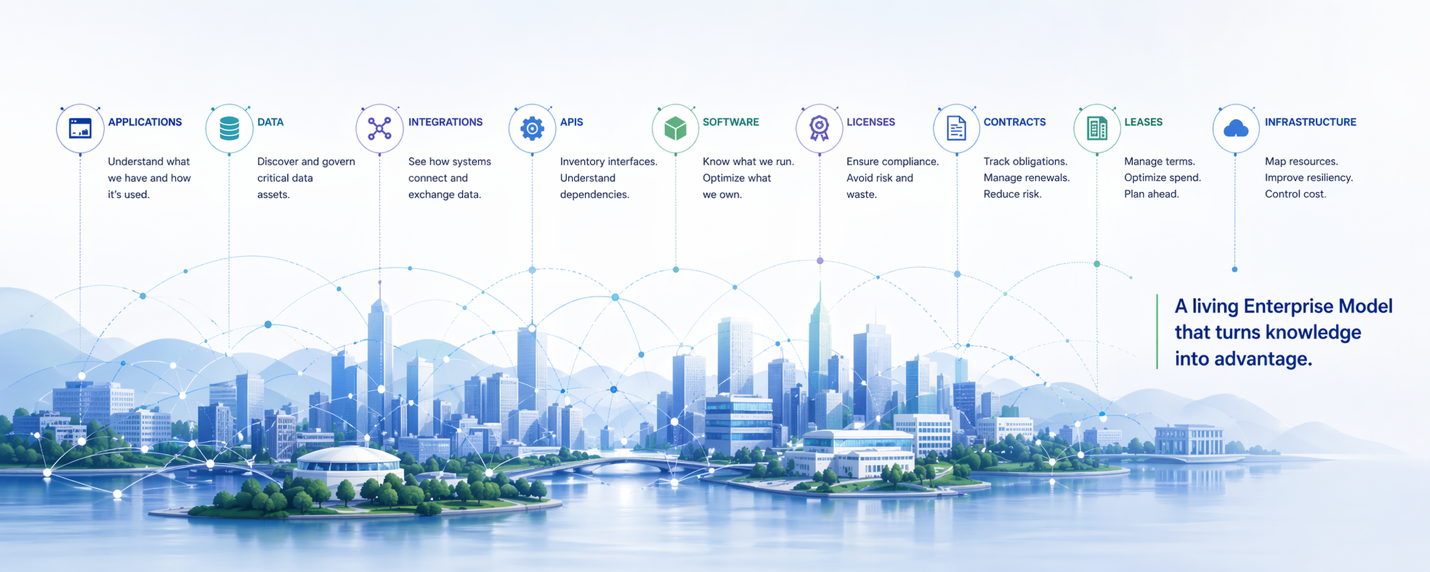
Enterprise inventories are only as valuable as they are accurate and current. Building and maintaining them has historically been prohibitively expensive --- requiring large teams to manually read documents, interpret diagrams, reconcile conflicting sources, and keep records current as the enterprise changes. Artificial intelligence changes that equation fundamentally. This article describes the types of documents you can feed to AI and the work AI can perform to help with the creation, relationship mapping, and maintenance of enterprise inventories and, ultimately, enterprise models.

read more
Bringing Life to Data & Knowledge Graphs With Time Tuples

Articles

Bringing Life to Data & Knowledge Graphs With Time Tuples

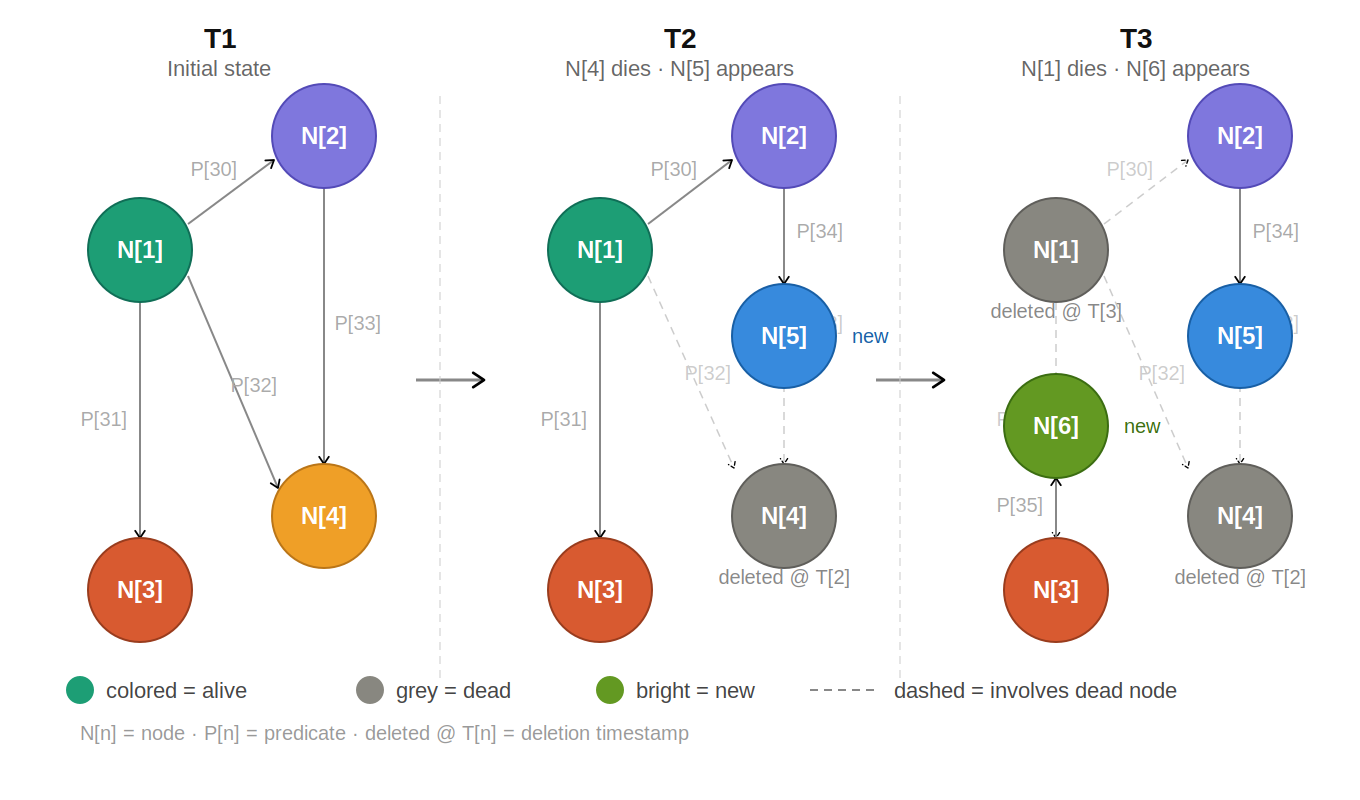
A static graph can tell you what is connected to what. It cannot tell you when those connections formed, when they ended, or what is scheduled to exist in the future. This article explores how promoting timestamp traits from nodes to reified relationships transforms a static snapshot into a temporally-aware model --- one that supports point-in-time comparison, historical analysis, future-state planning, and the inference of semantic anti-predicates when nodes die.

read more
AI Vibe Coding: Shadow IT's Far More Powerful and Dangerous Comeback

Articles

AI Vibe Coding: Shadow IT's Far More Powerful and Dangerous Comeback

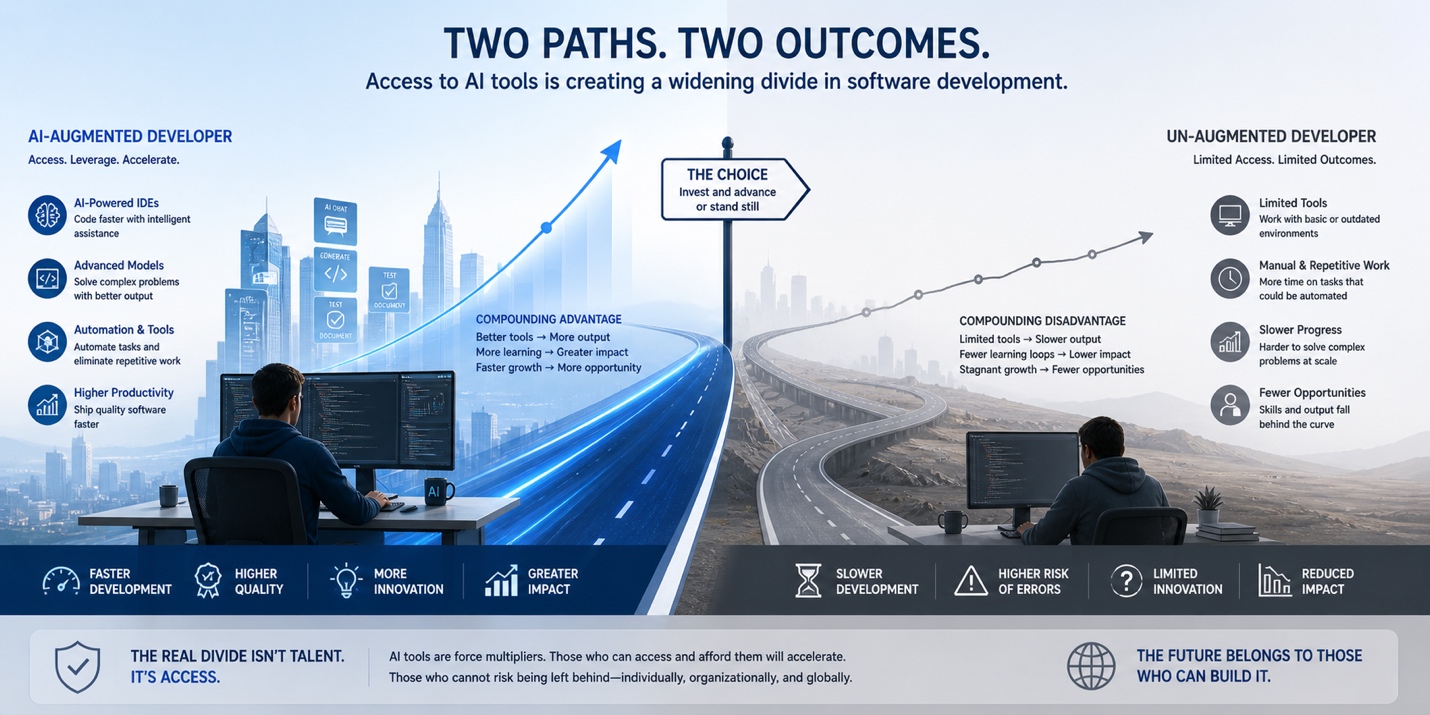
AI-assisted coding tools --- collectively referred to as Vibe Coding --- have collapsed the barrier between wanting software and having it. Business analysts, educators, finance managers, and operations leads are building functional, deployed applications without writing a line of traditional code, without filing an IT ticket, and without touching a single enterprise-governed system. They are running those applications in personal cloud accounts that IT cannot see, cannot audit, and cannot govern. The rogue server under someone's desk has been replaced by a cloud-hosted application that exists in no inventory, follows no security standard, has no backup and recovery plan, and will run flawlessly until the day it fails catastrophically. This is Shadow IT's most dangerous iteration yet --- and it is already here. The organizations that understand what is happening and act on it will come out ahead. The ones that don't will discover the problem the hard way.

read more
Understanding Reified Relationships, N-Tuples, and How They Give Life to Data

Articles

Understanding Reified Relationships, N-Tuples, and How They Give Life to Data

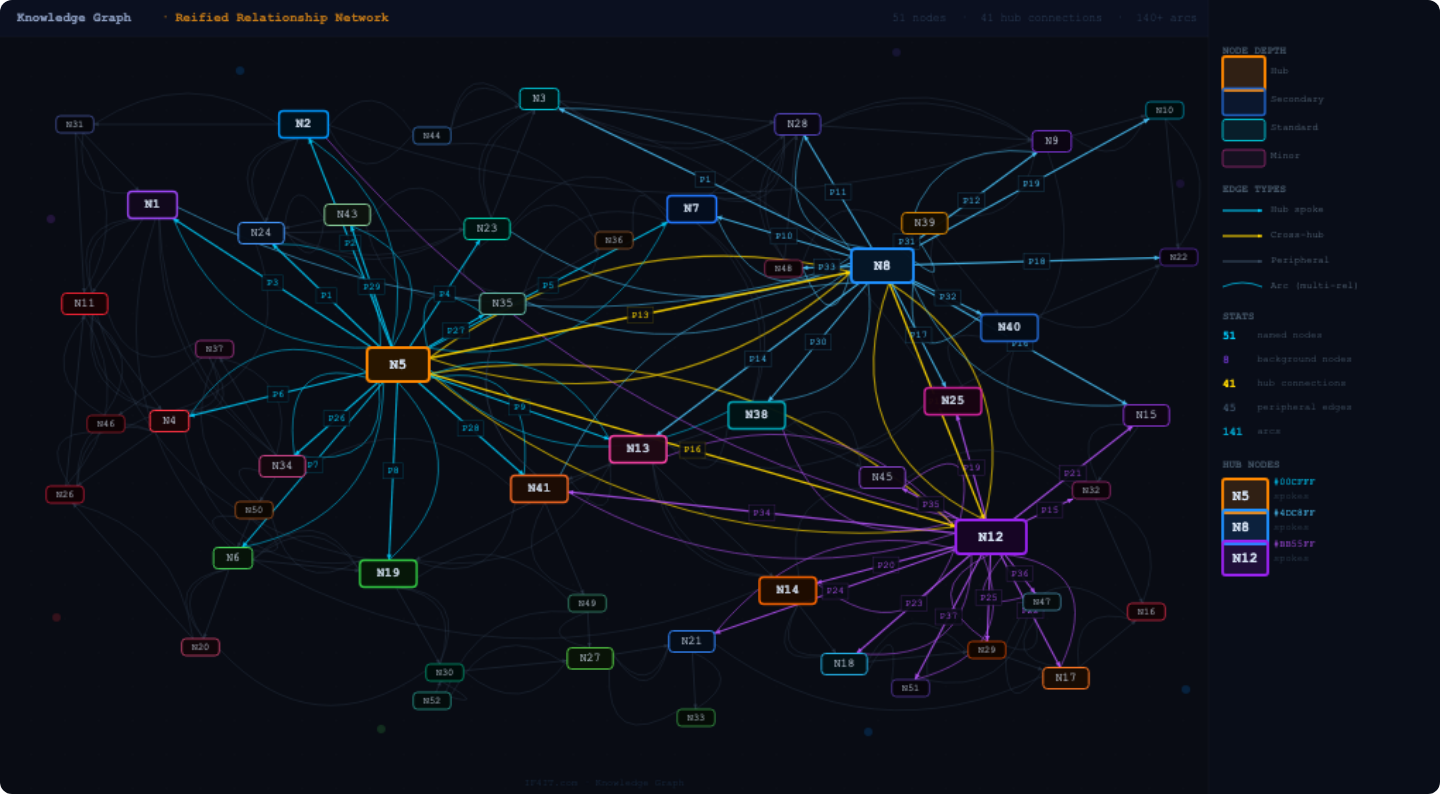
In data modeling, relationships are often treated as mere connectors between entities --- invisible wires that link records together without carrying meaning of their own. Reification changes that. By promoting a relationship into a first-class data object, reification allows the connection itself to be stored, described, queried, and extended. The shape of that resulting object --- the number and nature of its attributes --- is what N-tuple notation captures. When enough reified relationships are assembled around a node in a graph, they collectively form a Knowledge Profile: a rich, queryable, semantically expressive picture of everything the graph knows about that entity. This article argues that reification is not just a data modeling technique --- it is the foundation of how graphs come to life, and how the data systems that depend on them can be made to reason, generate meaning, and scale.

read more
From Cost Center to Value Engine: Reframing the Role of IT in the Modern Enterprise

Articles

From Cost Center to Value Engine: Reframing the Role of IT in the Modern Enterprise

For decades, IT has been viewed primarily as a cost center---essential, but burdensome. Today, that perception is not just outdated; it is strategically limiting. As digital transformation accelerates across industries, IT is increasingly recognized as a core driver of business value, innovation, and competitive differentiation. This article explores how organizations can reframe IT from a reactive support function into a proactive value engine, supported by industry research from firms such as McKinsey, Gartner, and Forrester, along with real-world enterprise examples.

read more
Data Integrations as Super-Tuples: Compound Relationships That Wire the Enterprise Model Together

Articles

Data Integrations as Super-Tuples: Compound Relationships That Wire the Enterprise Model Together

In most graph models of the enterprise, relationships are predicates - static assertions that one node is connected to another through some descriptive label. Data Integrations are fundamentally different. They are Super-Tuples: compound relationship objects whose attributes are simultaneously descriptors of the integration itself and references to nodes, classification indexes, and operational facts that radiate outward across the entire Enterprise Model. More than that, Data Integrations describe flow - the directed, operational movement of data between nodes - giving them a temporal and behavioral dimension that no other relationship type carries. They are not the adjectives of the Enterprise Model. They are its verbs.

read more
For Non-Coders & Coders: Build and Vet Your Application Ideas With AI-Generated Wireframes Before Using AI Vibe Coding to Build the Rest

Articles

For Non-Coders & Coders: Build and Vet Your Application Ideas With AI-Generated Wireframes Before Using AI Vibe Coding to Build the Rest

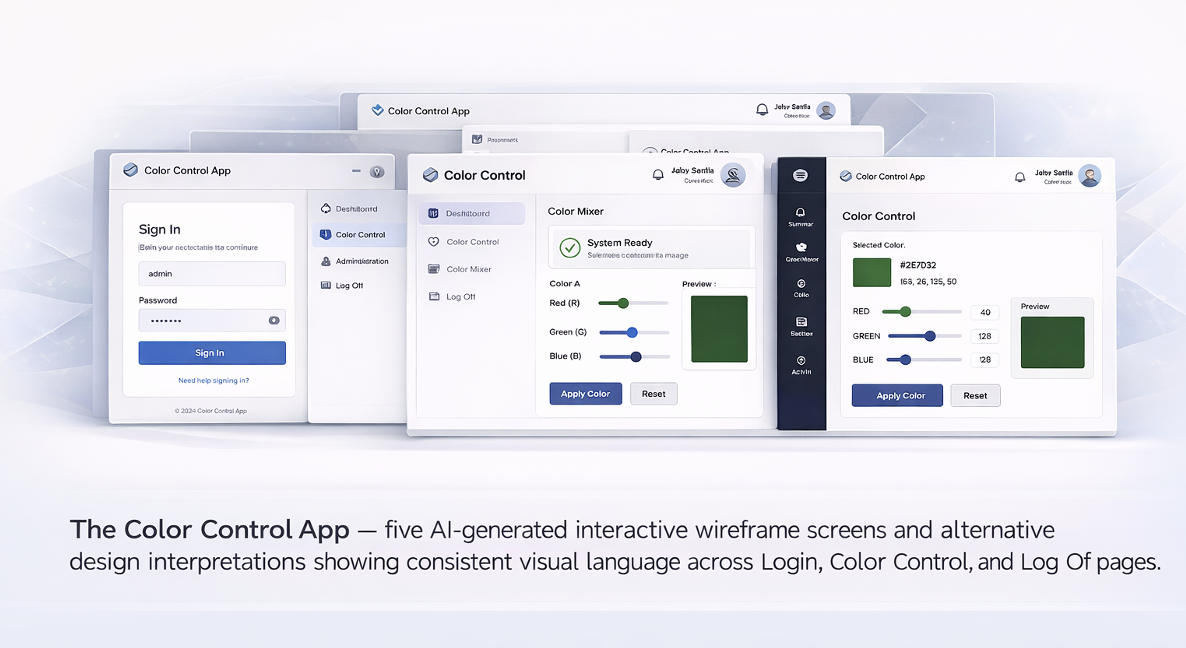
Before you write a single line of application code, you can know whether your idea works. AI has made interactive wireframing --- the practice of building a functional, testable representation of an application's user interface before committing to its full construction --- fast enough, cheap enough, and accessible enough that skipping it is no longer a reasonable choice. This article teaches a broad audience --- from non-technical readers like business analysts and liberal arts educators & students to technical readers like architects, software developers, and engineers --- how to use AI to build interactive wireframes that vet application ideas before investing in Vibe Coding's full backend and infrastructure, all using a real example: "Color Control App." The payoff is significant: ideas that fail are caught early, when fixing them costs minutes rather than weeks. Ideas that succeed arrive at the build phase with a validated specification, a tested UX, and a far clearer set of instructions for the AI tools that will build the rest.

read more
Make Architecture More Valuable: Take Ownership of Enterprise Process Automations and the Service Catalog

Articles

Make Architecture More Valuable: Take Ownership of Enterprise Process Automations and the Service Catalog

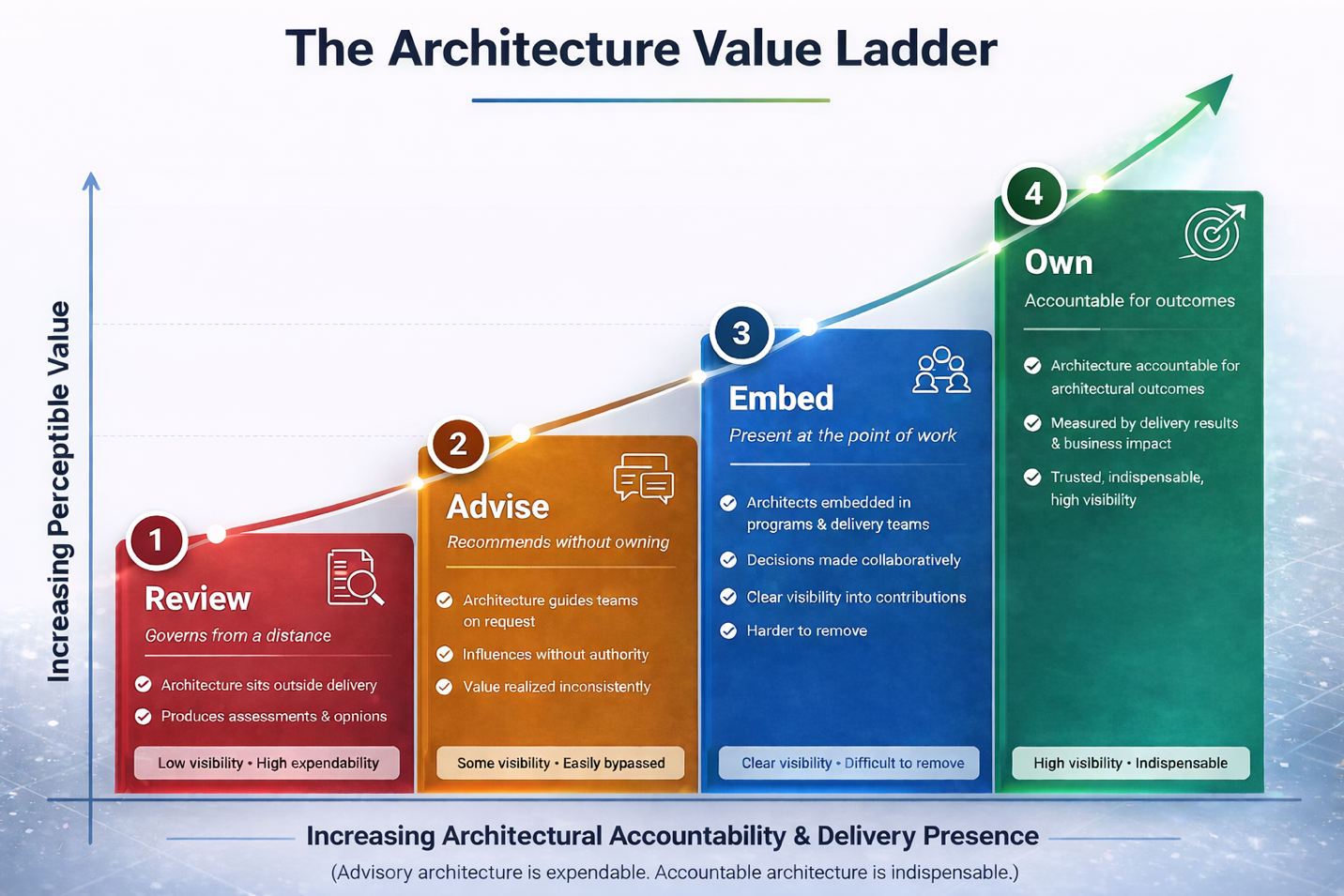
Enterprise architecture organizations face a chronic and self-reinforcing visibility problem. They design, govern, and advise --- but they rarely own. The result is a function whose contributions are structurally invisible to the executives who fund it, and whose survival is perpetually contingent on making the case for its own existence. This article argues for a second and complementary path to architectural ownership: taking deliberate control of two of the most operationally consequential assets in the modern enterprise --- process automations and the service catalog from which they are accessed and requested. Owning these assets does not just increase architecture's visibility. It places architecture at the intersection of every automated workflow, every service request, and every operational process that the organization depends on to function --- making it indispensable not in theory, but in daily operational practice.

read more
Product Thinking in IT: Treating IT Systems, Platforms, and Services Like Products

Articles

Product Thinking in IT: Treating IT Systems, Platforms, and Services Like Products

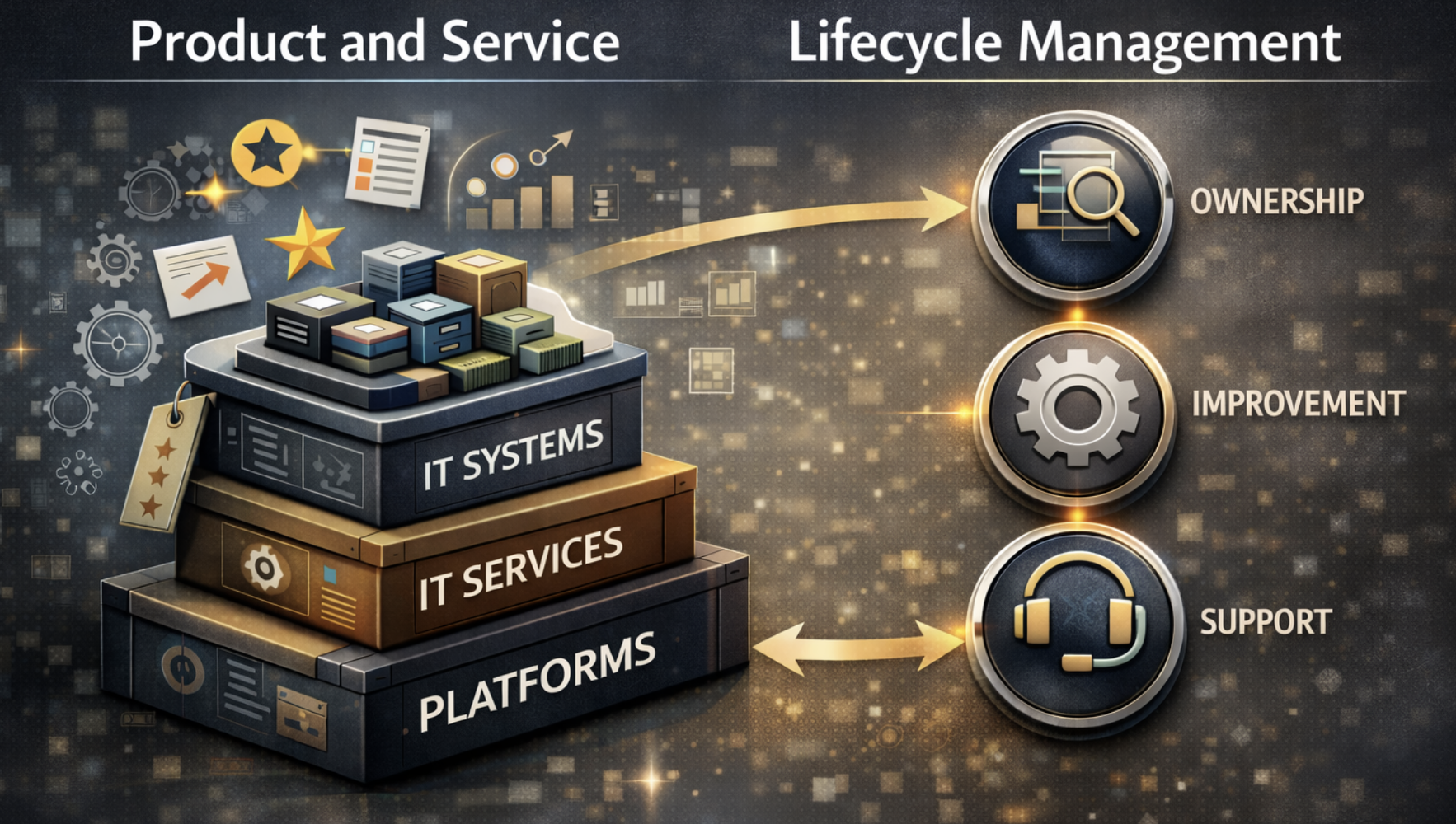
Applying product management principles and practices to internal IT systems, platforms, and services---ownership, lifecycle management, and continuous improvement.

read more
Strong CIOs & CTOs Demand Complete Documentation With No Excuses - Or No Production Deployment

Articles

Strong CIOs & CTOs Demand Complete Documentation With No Excuses - Or No Production Deployment

Incomplete, inaccessible, and inconsistent documentation is not a team discipline problem. It is a leadership permission problem. Teams produce incomplete documentation because their leaders allow them to - through tolerance, through exceptions, and through a persistent willingness to accept the excuses that make incomplete documentation sound reasonable. The impacts of poor documentation are far-reaching and significant, touching every team, every system, and every stakeholder in the enterprise. This article addresses CIOs and CTOs directly, discusses the scope and consequences of the problem, and describes the simple, structural policies that strong technology leaders can put in place to correct it - and explains why enforcement is straightforward: an undocumented application does not go to production, and the consequences for missing that gate are immediate and visible to everyone who matters.

read more
Make Architecture More Valuable: Have Enterprise Architecture Own the CMDB

Articles

Make Architecture More Valuable: Have Enterprise Architecture Own the CMDB

The Configuration Management Database (CMDB) and the Enterprise Model are, at their core, attempts to describe the same thing: the assets that compose the enterprise, their attributes, and the relationships between them. Yet in most organizations they are owned by different teams, maintained at different points in the asset lifecycle, and allowed to diverge in ways that damage both. The CMDB is given to operations, where it stagnates. The Enterprise Model is owned by Architecture, where it thrives --- but its value is limited by the fact that the operational processes that most need it are drawing from a CMDB that does not reflect it. This article argues that Enterprise Architecture should take ownership of the CMDB, and explains what changes when it does.

read more
Building Service Catalogs That Actually Work

Articles

Building Service Catalogs That Actually Work

There is a significant difference between a service catalog that IT is proud of and one that business stakeholders actually use. Most fall into the first category. They are technically complete, internally logical, and almost entirely ignored outside of IT. This article examines why --- and lays out the structural, language, and design decisions that turn a catalog from a reference document into a tool the business depends on.

read more
  • ««
  • «
  • 1
  • 2
  • »
  • »»
© Copyright Guerino Enterprises: 2008 - Present